Statute of limitations and Nazi crimes
The Collini CaseThe statute of limitations and Nazi crimes are linked in the novel through a legal change that made certain wartime killings effectively unprosecutable. The rule did not establish that Hans Meyer was innocent: it stopped proceedings before his guilt or innocence could be examined in a completed trial. In the courtroom, the distinction turns a technical change in limitation law into a conflict between legal closure and historical accountability.
The 1968 change
Since 1960, crimes committed during the Third Reich had generally been subject to a statute of limitations, with murder excepted and still prosecutable. The novel presents the change of 1 October 1968 as a sharp reversal within that framework. On that date, an apparently minor measure, the Introductory Act to Administrative Offences, took effect without being debated in the German Bundestag; the parliamentary deputies did not recognize its implications.
The crucial effect, as explained in court, was a change in how certain accessories to murder were classified for sentencing: they were treated under the rules for accessories to manslaughter instead. That altered classification brought cases within the limitation period. Once the period had expired, the people responsible could no longer be prosecuted. The change therefore did not simply close one investigation; it affected the legal possibility of bringing wider cases against those involved in Nazi crimes.
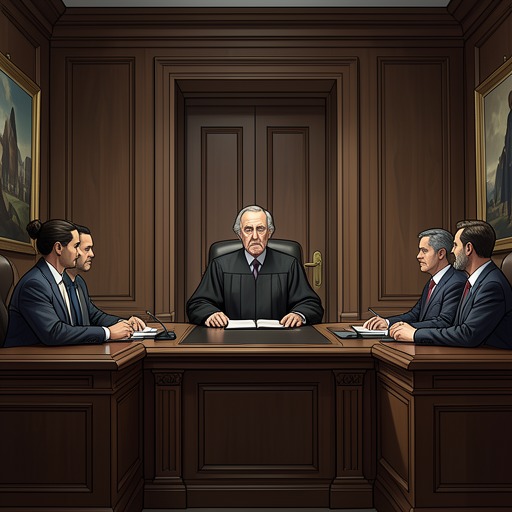
The law is attributed in the testimony to Dr Eduard Dreher. The courtroom explanation describes how legal administration departments in the eleven federal states, parliamentary deputies, and legal committees all failed to notice the consequence. The press exposed the resulting scandal, but recognition came too late to restore the lost opportunity for prosecution. The chain from a technical change in classification to an irreversible bar is central to the novel’s depiction of institutional failure.
The Meyer investigation
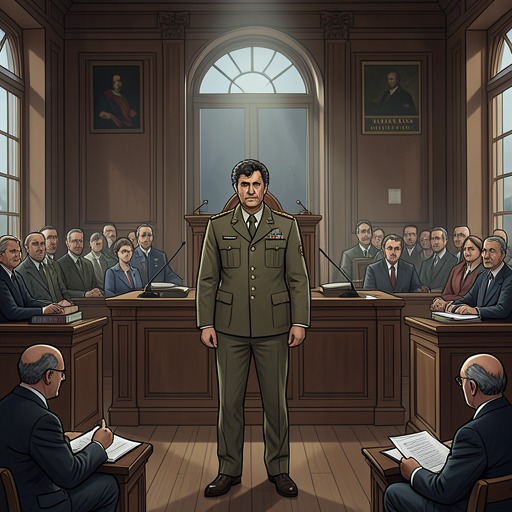
The consequences become personal through Fabrizio Collini’s account of his complaint against Hans Meyer. Collini identified the man responsible for having his father shot, presented the evidence, and trusted the authorities to investigate. The Stuttgart Public Prosecutor’s Office opened proceedings, conducted an investigation, and assembled a file. Yet Meyer was not even questioned, was never charged, and was never convicted.
The investigation was discontinued on 7 July 1969. The expert testimony connects that outcome to the statute of limitations created by the law that had taken effect the previous October. Collini, the court hears, received a letter informing him that the proceedings had been dropped because the matter was time-barred. The contrast is stark: he had followed the prescribed legal process, but the process ended without a judicial examination of Meyer’s guilt or innocence.
During cross-examination, Leinen makes that sequence plain to the courtroom: Collini gave the authorities a name and evidence, and the authorities later told him that the law prevented them from proceeding. The newspapers’ renewed note-taking marks the revelation as a public issue as well as a private injury. For Collini, the closure is not an answer about what happened; it is notice that the law will not allow the question to be tried.
Legal classification and historical judgment
The expert testimony also distinguishes the wartime conduct from the later legal classification. The partisans were shot on Meyer’s orders at the place where they would fall into a pit. They had no blindfolds, saw those who had already been killed, and heard their comrades being shot before them; the journey to the execution site lasted hours, during which they knew they would die. On that basis, the witness says the Federal Supreme Court would judge the matter differently today and regard Meyer as an accessory to murder.
That hypothetical modern assessment does not undo the earlier limitation bar. Leinen draws out the consequence: even if a present-day court would classify Meyer’s actions as complicity in murder, the law and jurisprudence would still protect him from prosecution because the limitation period had expired. The distinction is essential. A changed moral or legal assessment of the conduct cannot, under the rule described in the novel, reopen a case that has become time-barred.
The testimony places this mechanism in the context of potential prosecutions of officials who organized mass killings in Poland and the Soviet Union. By changing the treatment of some accessories, the law foreclosed proceedings against people whose roles in those crimes might otherwise have been examined in court. Its effect is presented as an amnesty in practice, not as a formal declaration that the crimes had not occurred.
Irreversibility and public memory
When Leinen asks why the law could not simply be repealed, the expert invokes a basic principle of a constitutional state founded on the rule of law: once a criminal offence has become subject to a statute of limitations, that determination cannot be reversed. The same legal principle that protects people from the retrospective revival of prosecution thus prevents a later correction of the 1968 change from reopening cases already beyond the limit.
The novel sets this legal finality against shifts in public understanding. The Auschwitz trial of 1963 to 1965 brought the horrors of the past before large parts of the population; the testimony also notes that public attitudes changed further after the television series Holocaust aired in the late 1970s. Yet a later change in social judgment could not restore the opportunity for prosecution that the limitation rule had removed. Historical recognition and legal remedy move on different timelines.
The issue reaches beyond the fictional courtroom. In January 2012, Germany’s Federal Minister of Justice appointed a committee to reassess the Nazi past’s legacy within the Ministry of Justice, and the novel itself became one point of reference for that review. The book thereby connects Collini’s unresolved case to an institutional question: how a legal system can reckon with its own history when a rule of law both constrains arbitrary prosecution and preserves the consequences of an earlier failure.